Cenotaph of Baybars
Type:
Cenotaphs
Date:
1277
Location or Findspot (Modern-Day Country):
Syria
Dimensions:
136 × 180 × 8 cm
Description:
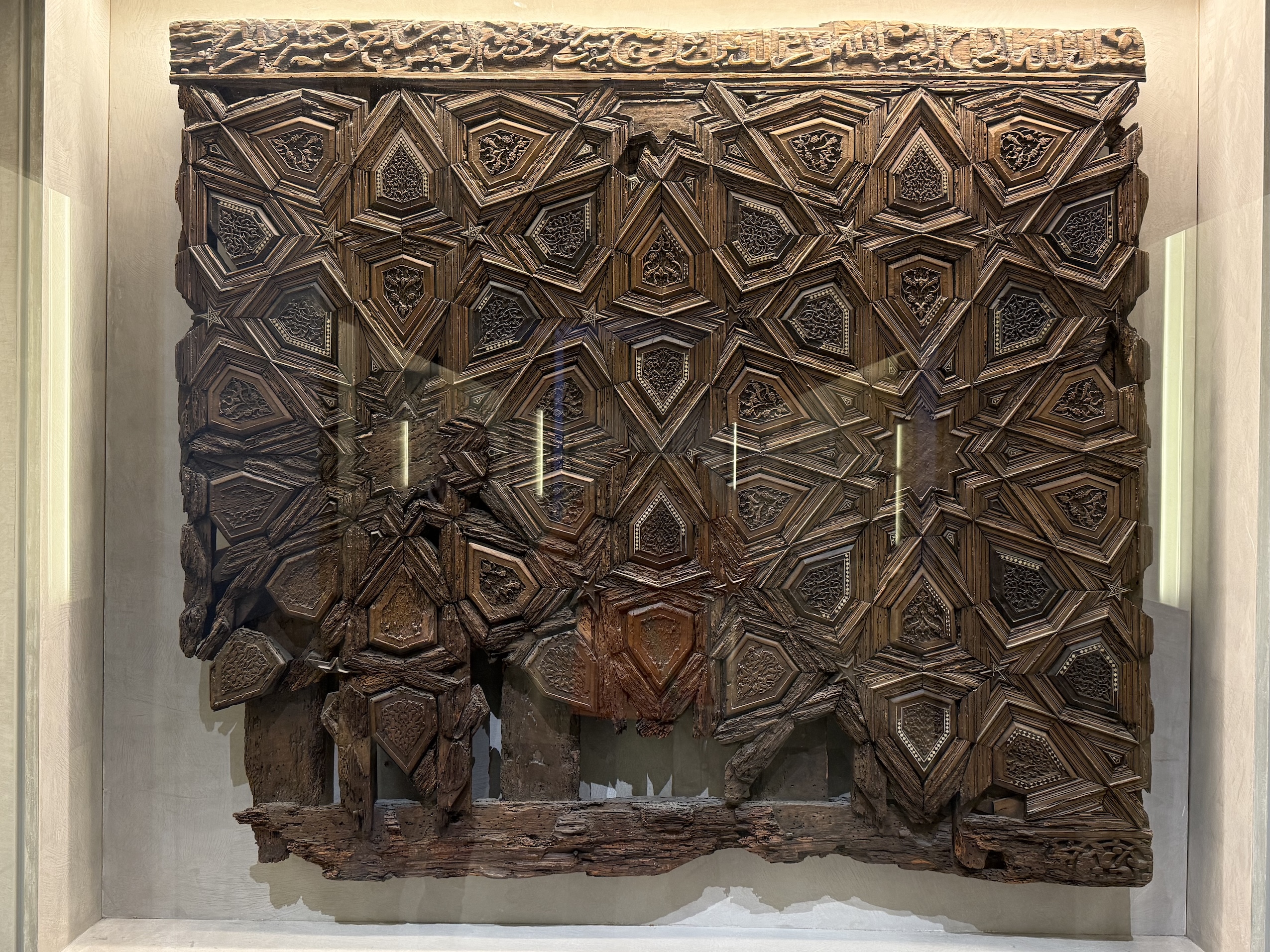
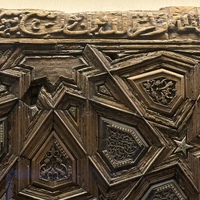
This wooden cenotaph commemorates the death of the Mamluk sultan Baybars, who had captured King (later Saint) Louis IX in Egypt during the failed Seventh Crusade (1250) and stopped the Ilkhanids' advance westward ten years later. Baybars's name and date of death appear in the fragmentary Arabic relief inscription at the top. It reads: " [. . . The fighter] in the path of Allah, the pilgrim to the Abode of God, Rukn al-Dīn Abu al-Fath Baybars; he died on Thursday, the 27th of Muharram of the year [676, i.e., June 30–July 1, 1277]. Baybars was buried in Damascus, Syria.
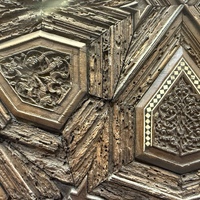
The panel is composed of boxwood, poplar, and jujube woods, inlaid with ivory in a geometric pattern that radiates from ten-pointed stars. Most of the wooden pieces are carved with intricate vegetal patterns. The small pieces interlock, as in a jigsaw puzzle; larger panels of wood would have warped or cracked in the dry climate of the Mamluks' kingdom (Egypt and Syria). This is one of the earliest works in which ivory inlay was combined with wood. Such carefully executed marquetry work likely originated in Damascus, from which it spread to Egypt and beyond.
The panel is composed of boxwood, poplar, and jujube woods, inlaid with ivory in a geometric pattern that radiates from ten-pointed stars. Most of the wooden pieces are carved with intricate vegetal patterns. The small pieces interlock, as in a jigsaw puzzle; larger panels of wood would have warped or cracked in the dry climate of the Mamluks' kingdom (Egypt and Syria). This is one of the earliest works in which ivory inlay was combined with wood. Such carefully executed marquetry work likely originated in Damascus, from which it spread to Egypt and beyond.
Relevant Textbook Chapter(s):
9
Repository and Online Resources:
• The cenotaph is in Lyon, Musée de Beaux-Arts, no. D 351.
Image Credits:
Linda Safran