Bedale Hoard
Date:
late ninth century
Location or Findspot (Modern-Day Country):
England
Description:
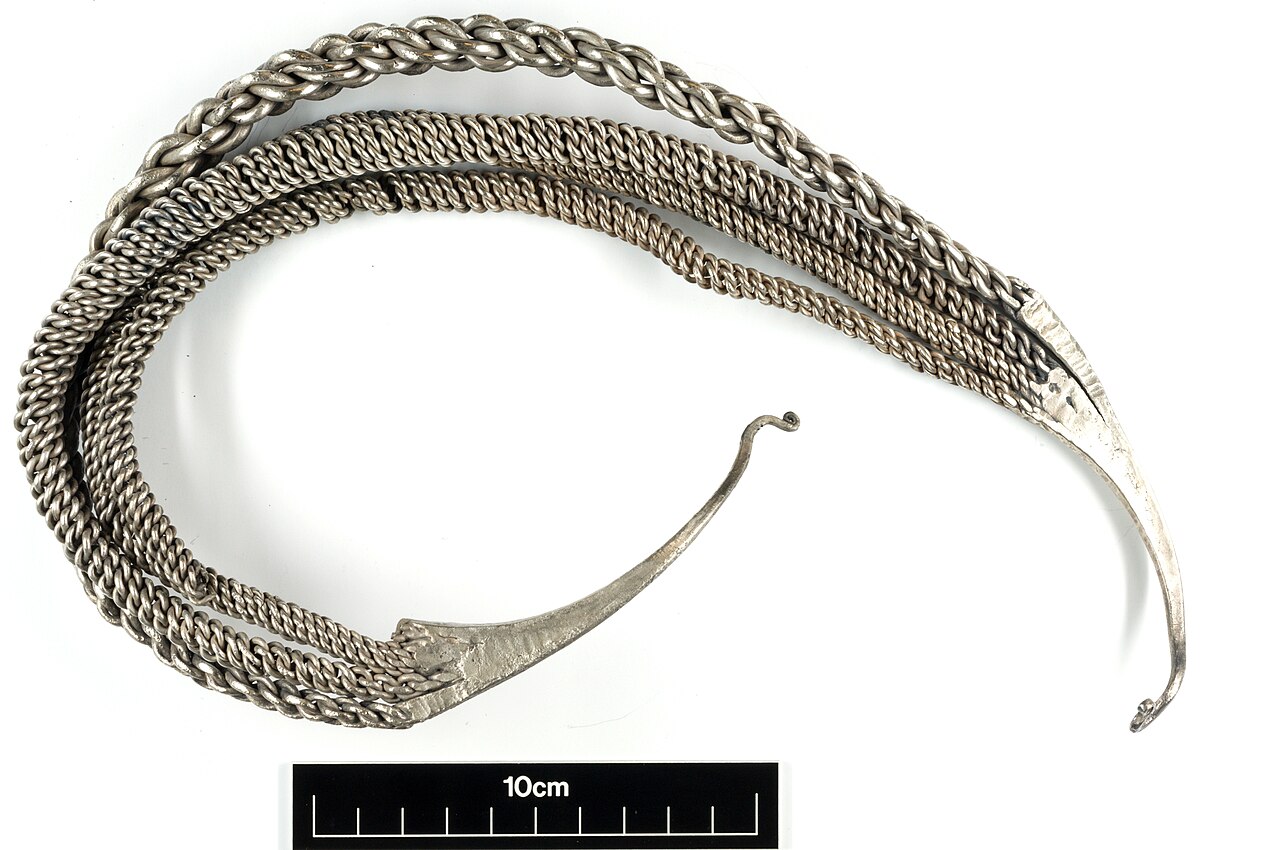
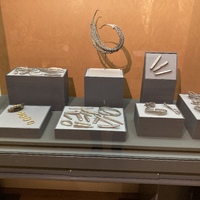
The Bedale Hoard of thirty-seven objects was discovered in 2012, hidden under a flat stone and a sheet of iron. It consists of silver ingots, neck and arm rings, a bossed brooch, a gold-inlaid sword pommel, and other fragments. Some pieces are hacksilver—silver objects deliberately cut up for their value as bullion. Many of the objects were nicked, a way to test whether they were only silver plated rather than solid silver.
The iron sword pommel is unusual in having gold hoops and rivets and gold-foil plaques decorated with animal interlace. Most swords, if they were decorated at all, had silver rather than gold inlays. The interlace on the plaques is comparable to that found on English works of the late ninth century, as is the shape of the pommel. Other objects came from Ireland and Scandinavia. This combination of Scandinavian-type silver and Anglo-Saxon gold is paralleled only by the Galloway Hoard from Scotland. The Bedale Hoard was probably assembled near its findspot in northern England.
Recent geochemical studies have investigated the origins of the silver used to cast these objects. The Vikings' main source of silver was western Europe, in the form of coins or objects acquired by raiding or trading and then melted down. But they also acquired silver from Islamicate lands, in the form of dirhams. These recycled Abbasid, Umayyad, Sasanian, and possibly Samanid coins, along with imitation dirhams from the Khazar kingdom, arrived in Scandinavia via long-distance trade, mostly furs and slaves. Trace-element and lead-isotope analyses thus reveal extensive commercial contacts between Scandinavians and the Abbasid Caliphate in the late ninth century.
Relevant Textbook Chapter(s):
5
Repository and Online Resources:
• The Bedale Hoard is in the Yorkshire Museum in York, England.
• Watch a 7-minute video about the hoard here.
Image Credits:
Images courtesy of York Museums Trust, CC; Linda Safran