Ince Minareli medrese
Type:
Educational institutions,
Minarets,
Portals
Date:
ca. 1260–65
Location or Findspot (Modern-Day Country):
Turkey
Dimensions:
portal 7 × 5.5 m
Description:
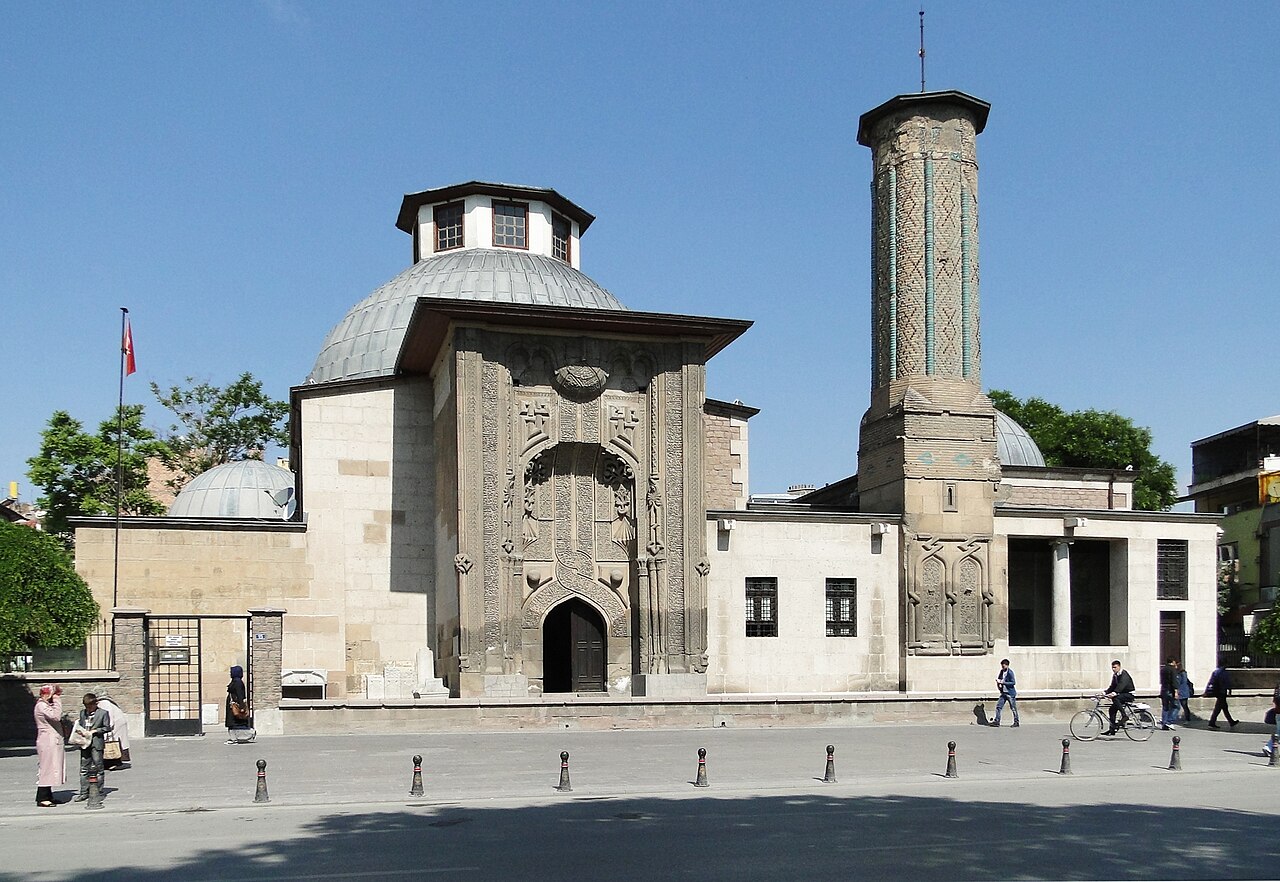
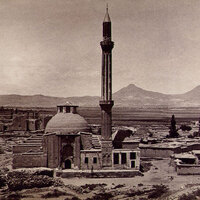
This madrasa (Turkish medrese) in Konya is named for its tall, slender (ince) minaret, which collapsed in 1901 after a lighting strike. Only the lower parts of the minaret survive today, a square stone base supporting a brick cylinder previously covered with glazed and unglazed green tiles.
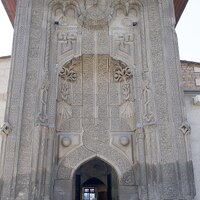
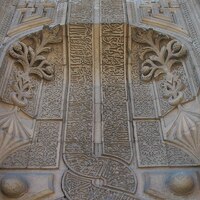
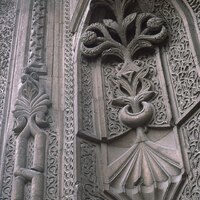
The minaret abuts a domed mosque adjacent to the rectangular madrasa, most of which is also in ruins. The brick madrasa had student cells and classrooms around a domed courtyard with a central pool. An wan at the west end was opposite the monumental portal, 7 meters tall, which is still preserved. The portal showcases the stonecarving skills of the Seljuq artists, including an unusual pair of artichoke plants. An inscription intertwined with vegetal and geometric motifs rises the height of the portal and records that the madrasa was commissioned by the vizier Sahib 'Ata Fakhr al-Din 'Ali (d. 1288), a major patron of architecture in Konya after the Seljuks recaptured the city from the Mongols. The name of the architect, Keluk bin Abdullah, appears in two rosettes on the side of the portal.
The minaret abuts a domed mosque adjacent to the rectangular madrasa, most of which is also in ruins. The brick madrasa had student cells and classrooms around a domed courtyard with a central pool. An wan at the west end was opposite the monumental portal, 7 meters tall, which is still preserved. The portal showcases the stonecarving skills of the Seljuq artists, including an unusual pair of artichoke plants. An inscription intertwined with vegetal and geometric motifs rises the height of the portal and records that the madrasa was commissioned by the vizier Sahib 'Ata Fakhr al-Din 'Ali (d. 1288), a major patron of architecture in Konya after the Seljuks recaptured the city from the Mongols. The name of the architect, Keluk bin Abdullah, appears in two rosettes on the side of the portal.
Relevant Textbook Chapter(s):
9
Repository and Online Resources:
• Learn more about this madrasa on the Discover Islamic Art (Museum with No Frontiers) website.
Image Credits:
Wikimedia Commons