Harbaville Triptych
Type:
Triptychs,
Sculptures
Date:
mid-tenth century
Location or Findspot (Modern-Day Country):
Turkey
Medium:
Ivory
Dimensions:
28.2 × 24.2 × 1.2 cm (open)
Description:
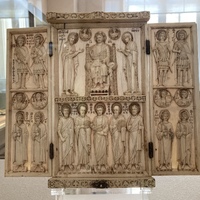
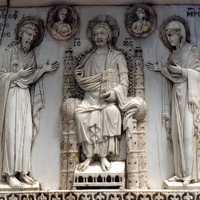
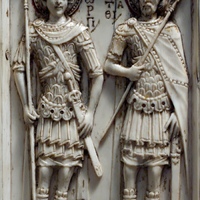
This Byzantine ivory triptych, made in a workshop in Constantinople, was the focus of private devotions by an unknown male owner. When the wings are opened, the interior reveals the Deesis at the top, carved in high relief; below are five apostles, with Peter at the center pointing up to Christ. On the wings are male saints, soldiers in military dress and martyrs in courtly attire; they are paired by type and age. All of the figures are identified in Greek, as was customary after the end of iconoclasm. The open triptych presents the heavenly court, which was thought to be mirrored in the earthly court, with courtiers arrayed in orderly groups around the enthroned emperor. This image of (male) power is accessed by opening the wings of the triptych, much like passing through the doors and curtains of the imperial palace.
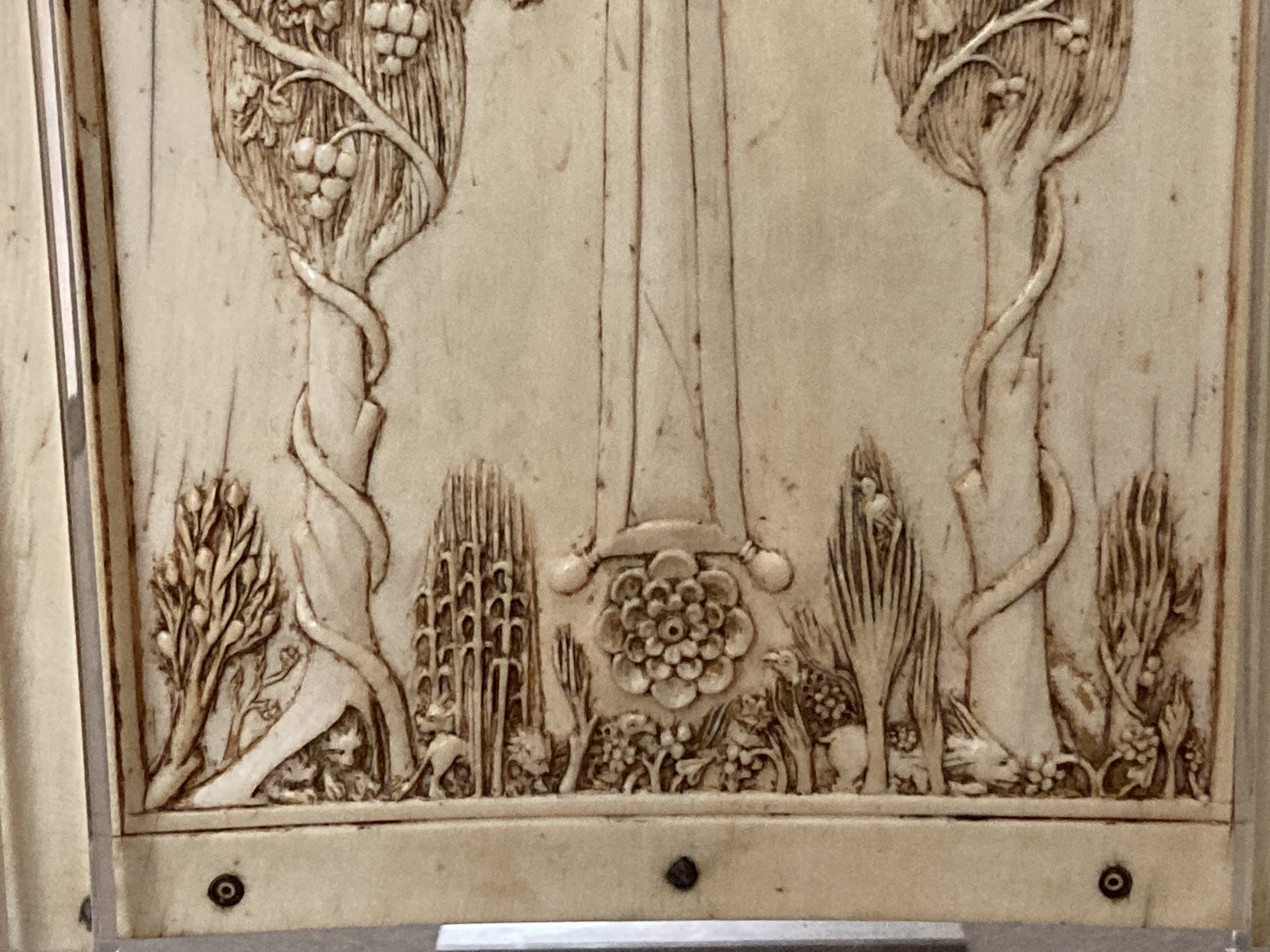
On the back is a symbolic image of Paradise. The cross used for Christ's crucifixion was thought to have grown from the tree of life in the Garden of Eden. Twin cypress trees lean in toward the life-giving cross, from which five rosettes grow (the five wounds of Christ?). Vines grow around the cypresses; the left one bears grapes while the right is ivy. Birds perch on both vines. The twenty-four stars probably represent the twenty-four Elders around the throne of God in Paradise (Rev. 4:1–4). Below is lush vegetation inhabited by animals (a bird, fox, lion). The inscription says "Jesus Christ Conquers." More saints, mostly Church fathers holding books, adorn the outside of the wings.
The Harbaville ivory is one of a group produced in the same imperial workshop, called the Romanos Group after the ivory plaque with Emperor Romanos and Empress Eudokia in the Bibliothèque nationale de France. Most scholars now agree that this is Romanos II, so these ivories can be dated to the mid-tenth century. One diagnostic feature of the group is the pearl-edged nimbi. Traces of color survive, but when the color was added is disputed.
The triptych is named for an antiquarian named Harbaville who owned the work in the nineteenth century.
Relevant Textbook Chapter(s):
Introduction,
5
Repository and Online Resources:
• The triptych is in the Musée du Louvre, Paris (OA 3247).
• Watch a SmartHistory video on the triptych here.
Image Credits:
Linda Safran; Wikimedia Commons
Tags:
Byzantine,
Access to the sacred,
Artistic production,
Ideology,
Animals,
Bible,
Greek ,
Saints